Digital Technologies Research and Applications

Volume 5 Issue 3: September 2026 (In Progress)

Article Article ID: 1767

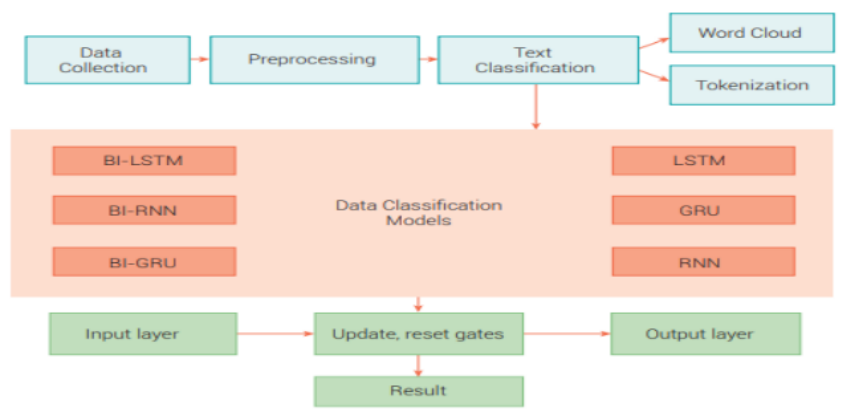
Detection of Cyberbullying on Facebook Twitter (X) Using Bi-Directional Long Short-Term Memory and Extreme Gradient Boost Algorithms

The social networking sites have transformed digital communication but have simultaneously enabled the escalation of harmful online behaviors, particularly cyberbullying. This recurring form of digital aggression can lead to serious emotional and psychological harm, including anxiety, depression, and in severe cases, self-inflicted injury or suicidal behavior. The timely identification and prevention of cyberbullying have become an essential focus of current research. Although numerous machine learning techniques have been applied to detect abusive content, many continue to face challenges such as inefficient kernel tuning, extended training durations, and reduced predictive accuracy. To address these limitations, this study presents a hybrid deep learning architecture that integrates a Bidirectional Long Short-Term Memory (BiLSTM) network with the Extreme Gradient Boosting (XGBoost) algorithm to improve contextual awareness and classification accuracy. The proposed framework was trained and evaluated on datasets collected from Facebook and X (formerly Twitter), capturing diverse linguistic and behavioral characteristics of user interactions. Experimental results indicate that the BiLSTM–XGBoost hybrid model outperforms conventional classifiers by effectively managing context representation, adaptive learning, and class imbalance. The model achieved 97% accuracy, 95% precision, 92% recall, and an F1-score of 96%, confirming its robustness and efficiency for cyberbullying detection in dynamic social media environments. The study helps educational institutions, online platforms and legal frameworks provide insights into how to better identify cyberbullying in real-world scenarios. The study’s high recall ensures that cyberbullies are easily identified and it enhances the understanding of how combining multiple models can lead to better performance in cyberbullying detection.

Article Article ID: 2388

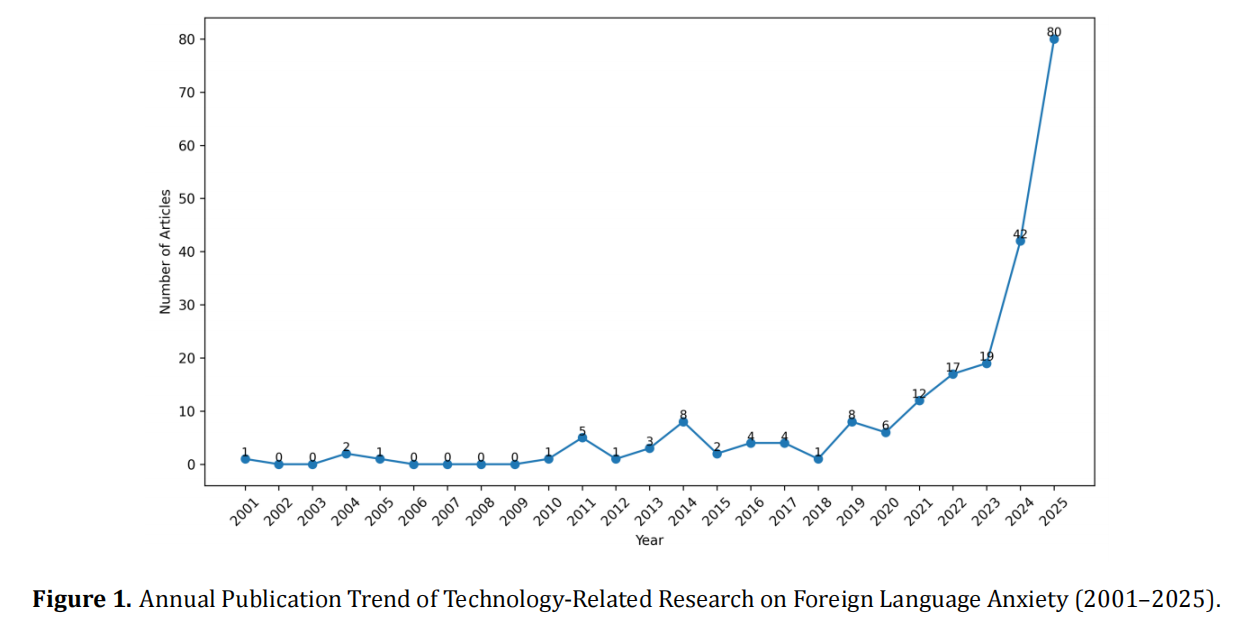
Mapping the Landscape of Technology-Related Research on Foreign Language Anxiety: A Bibliometric Review (2001–2025)

This study uses bibliometric analysis of journal papers published between 2001 and 2025 to investigate the state of the research on technology-related foreign language anxiety (FLA). 224 articles that were indexed in the Scopus database were included in the data. This study used the Bibliometrix package in R to examine publishing patterns, top journals, authors, and institutions, records of international collaboration, and the thematic structure of the field using bibliometric performance indicators and scientific mapping approaches. The findings indicate a consistent and incredibly rapid rise in publications during the past ten years. The majority of the research field's progress is published by a small number of writers and institutions in a limited number of journals. Although China now accounts for the majority of articles geographically, extensive international collaborative networks are still limited and in the early stages of development. Research focus has clearly changed throughout time, as seen by thematic and keyword analysis. While computer-assisted language learning and technology-enhanced learning environments have historically been the focus of education technology research, more recent literature shows a growing interest in artificial intelligence, immersive technologies, and data-informed digital learning contexts. Foreign language anxiety is the subject of an increasing amount of study, which typically places it in positive psychological contexts and focuses on its relationship to motivation, self-efficacy, and communication willingness. These findings will help better understand the origins of technology FLA research and how it is evolving. They can also provide references for upcoming investigations into the potential effects of digital technologies on language learners' emotions.

Article Article ID: 1751

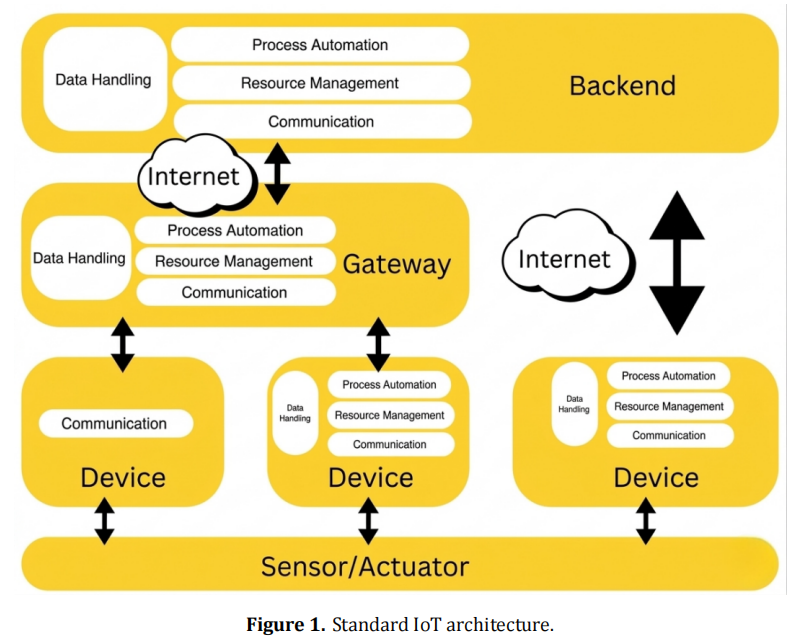
Towards a Unified Ecosystem: Strategies for Enhancing Interoperability in IoT and Big Data Frameworks

As the concepts of IoT systems deepen, the world inclines towards safety, energy management, sustainability, efficiency, predictability and prevention. With an estimated global market spending on IoT of about $15 trillion by 2030, seamless integration of IoT devices and big data platforms is considered vital to ensure a robust, efficient, and secure IoT ecosystem. Despite its wide application the integration of IoT and big data frameworks is hindered by heterogeneous devices and protocols, semantic incompatibility, and scalability gaps between real-time IoT streams and Big Data systems. Data quality issues, lack of unified standards across edge, fog and cloud layers, security model mismatch, and fragmented data formats and vendor-specific ecosystems are additional challenges that create significant obstacles to seamless data exchange, unified analytics and reliable end-to-end integration. Through a conceptual research method of study, this paper highlights the interoperability of the IoT framework and big data analytics, the application areas of the framework providing sustainable solutions, challenges and opportunities that reflect the need for advancements of the framework strategies followed by recommendations to effectively mitigate the existing and future risks and challenges.

Article Article ID: 2244

Insights into Digital Technologies Sustainability and the Economic Performance of Greek Enterprises

This research examines how specific digital technologies—including artificial intelligence (AI) systems based on machine learning algorithms, data analytics platforms for real-time decision support, cloud computing infrastructures, Internet of Things (IoT) sensor network applications, and digital market platforms—affect the economic performance of Greek enterprises. Rather than treating digitalization as a homogeneous input, the analysis explicitly distinguishes between technology types and their application mechanisms within firms. Market-facing technologies (e-commerce systems and digital marketing platforms) operate primarily through demand expansion and market access, while production- and decision-oriented technologies (AI, machine learning-based analytics, IoT sensor networks, and cloud infrastructures) affect performance through process optimization, resource allocation efficiency, and organizational learning. Using a theory-driven and visualization-based analytical framework grounded in enterprise survey evidence, the study evaluates the association between individual and combined technology adoption and key performance indicators, including output growth, labor productivity, and total factor productivity (TFP). The results indicate that AI and data analytics systems enhance productivity through algorithmic optimization and data-driven decision processes, while IoT applications contribute via real-time monitoring, predictive maintenance, and input efficiency improvements. Cloud computing functions as a general-purpose enabling infrastructure, amplifying the productivity effects of other technologies. Enterprises adopting multiple complementary technologies exhibit significantly stronger performance outcomes than single-technology adopters, with multi-technology integration associated with TFP gains of approximately 15–20% in digitally mature firms. The findings highlight that digital transformation improves economic performance primarily through technology-specific application mechanisms and cross-technology complementarities, rather than through generic digital adoption alone.